Cue
A cue is a reliable moment that reminds the person what comes next. It can be a time, place, object, or completed task.
Daily structure
A routine is a helpful frame, not a test. Loreus looks at the sequence, cues, transitions, and choices that make a repeated practice easier to understand.
| Starting point | Useful cue | Compact version |
|---|---|---|
| Morning | After washing or dressing | One minute of easy movement |
| Work break | Before opening a new task | Walk to a window and return |
| Meal | Before the first bite | One quiet breath and a glass of water |
| Evening | After the final work message | Put one object away and dim one light |
A cue is a reliable moment that reminds the person what comes next. It can be a time, place, object, or completed task.
A sequence removes unnecessary decisions. It should be short enough to remember and flexible enough to survive a change in schedule.
A clear ending tells the mind that the practice is complete. This makes it easier to move on without wondering whether more was required.
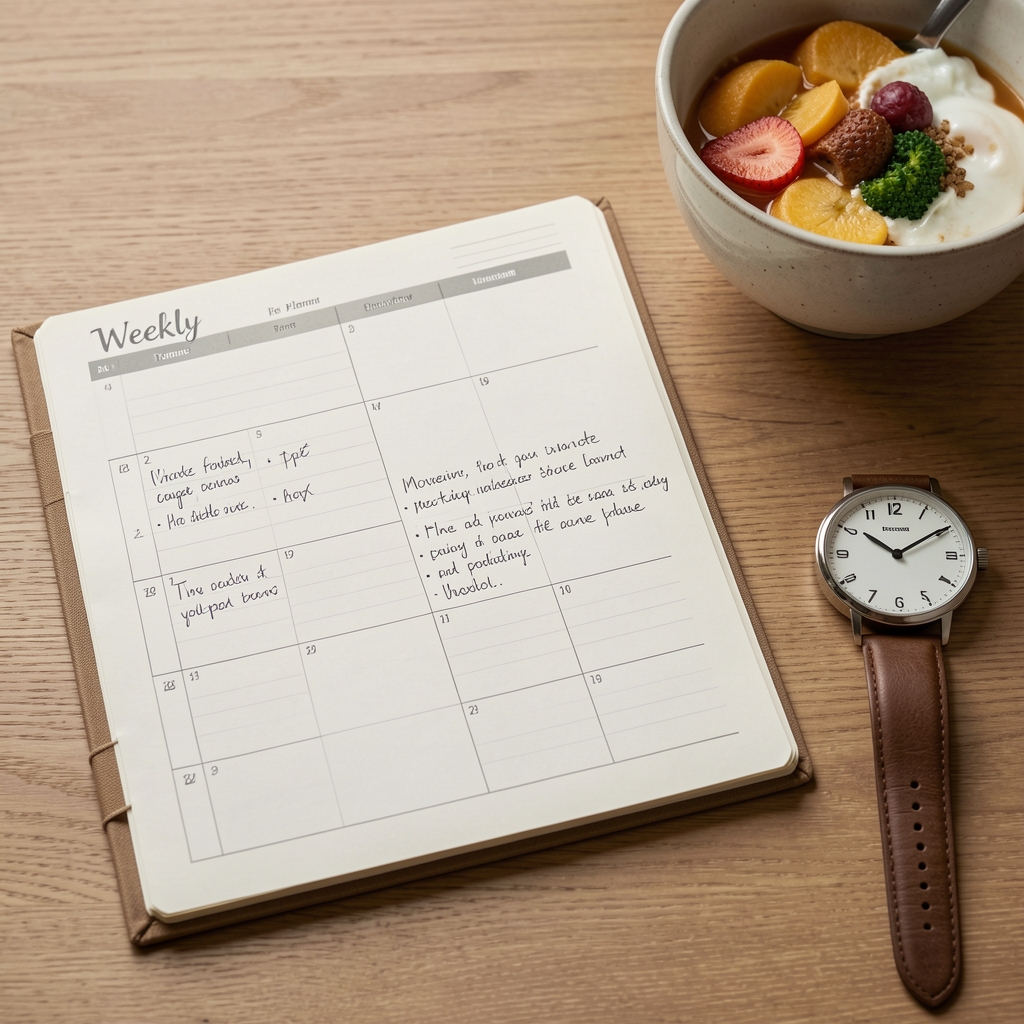
Many routines fail at the edges. A person may know what they want to do but not when to change clothes, clear space, finish a meeting, or return to work. Writing the transition can make the plan more realistic.
For example, a short walk may begin after placing a phone on charge and end at the same doorway. A reading routine may begin by closing a laptop and setting one page open. These cues are ordinary, which is precisely why they can be useful.
“The most useful routine is often the one that explains how to begin and how to stop.”
Long enough to serve its purpose and short enough to fit an ordinary day. The answer depends on the person and the setting.
Return at the next clear cue. There is no need to create extra work to compensate for an interruption.
Yes, but begin with one dependable sequence so that each part remains understandable.
Send Loreus a clear description of a routine, its setting, and what makes it adaptable. Contact Jl. Thamrin No. 8, Menteng, Central Jakarta, Jakarta 10310, Indonesia, or +62 21 6815 3047.